
Educational Skeleton Videos
Create engaging educational explainer shorts with a skeleton narrator. The skeleton format is especially effective for science, health, anatomy, and "what happens to your body" content on TikTok, YouTube Shorts, and Reels.

Why Skeleton Narrators Work for Educational Content
The skeleton explainer format has unique advantages for educational short-form video that other styles don't offer.
Visual Simplicity
A skeleton character removes distractions. Viewers focus on the information, not on a presenter's appearance or background. This is especially valuable for complex topics.
Universal Appeal
A skeleton character has no age, race, or gender. This makes the content accessible to a global audience and avoids the identification barriers that human presenters can create.
Scene Flexibility
A skeleton can be placed in any environment — inside a human body, in ancient Rome, on a molecular level. This makes it ideal for visualizing abstract or microscopic concepts.
High Retention Format
Educational skeleton shorts combine surprising facts with dramatic visuals. This pairing keeps viewers watching longer than traditional talking-head educational content.
Educational Topic Types That Work Best
These categories have proven to perform well with the skeleton explainer format.
"What Happens to Your Body If..."
Health and biology explainers are the strongest niche for skeleton educational content. Examples: what happens if you don't sleep, if you only drink soda, if you hold your breath.
Science & Nature Facts
Physics, chemistry, astronomy, and natural science topics. The skeleton narrator can 'enter' microscopic or cosmic environments to explain concepts visually.
History & Civilization
Historical events, ancient civilizations, and 'what life was really like' content. Viking and Royal skeleton styles work particularly well here.
Personal Finance & Economics
Money-related educational content — compound interest, inflation, economic history. The comparison format (X vs Y) fits naturally.
Geography & Countries
Country comparisons, geographical facts, and 'what if' scenarios about places. The skeleton can 'travel' to any location.
Psychology & Brain Science
How the brain works, cognitive biases, psychological phenomena. The skeleton format can visualize internal mental processes in an accessible way.
Workflow for Educational Skeleton Shorts
The production process for educational skeleton videos follows the same pipeline as other skeleton shorts, with a few content-specific adjustments.
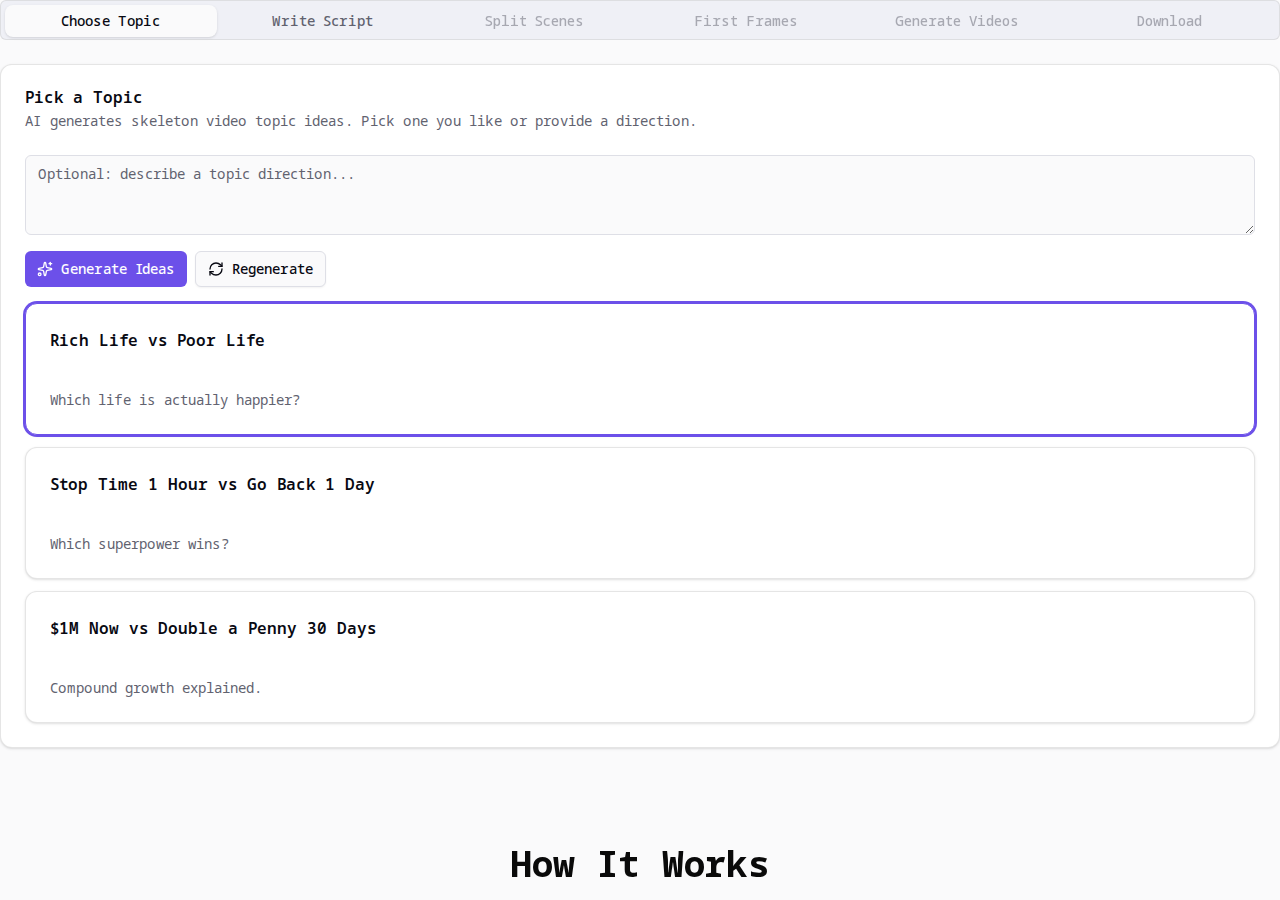
1. Pick an Educational Topic
Choose a topic where the audience already has some curiosity but incomplete knowledge. 'What happens to your body if you eat before bed' works better than 'how digestion works' — specific questions outperform general explanations.
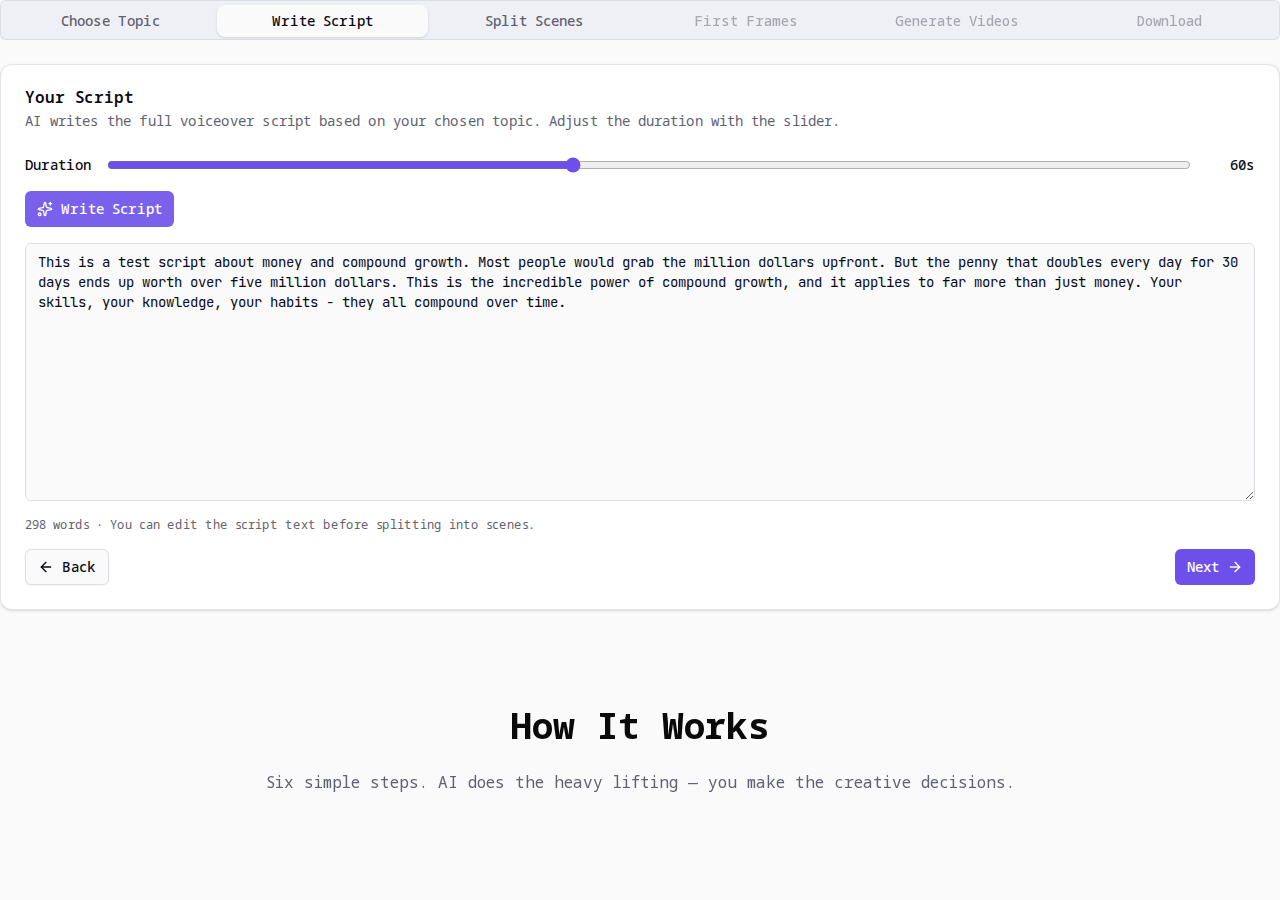
2. Write a Fact-Based Script
Educational scripts need accurate information presented in an engaging way. Lead with the most surprising fact, then explain why it happens. Keep each fact to one sentence — short-form viewers won't wait for lengthy explanations.
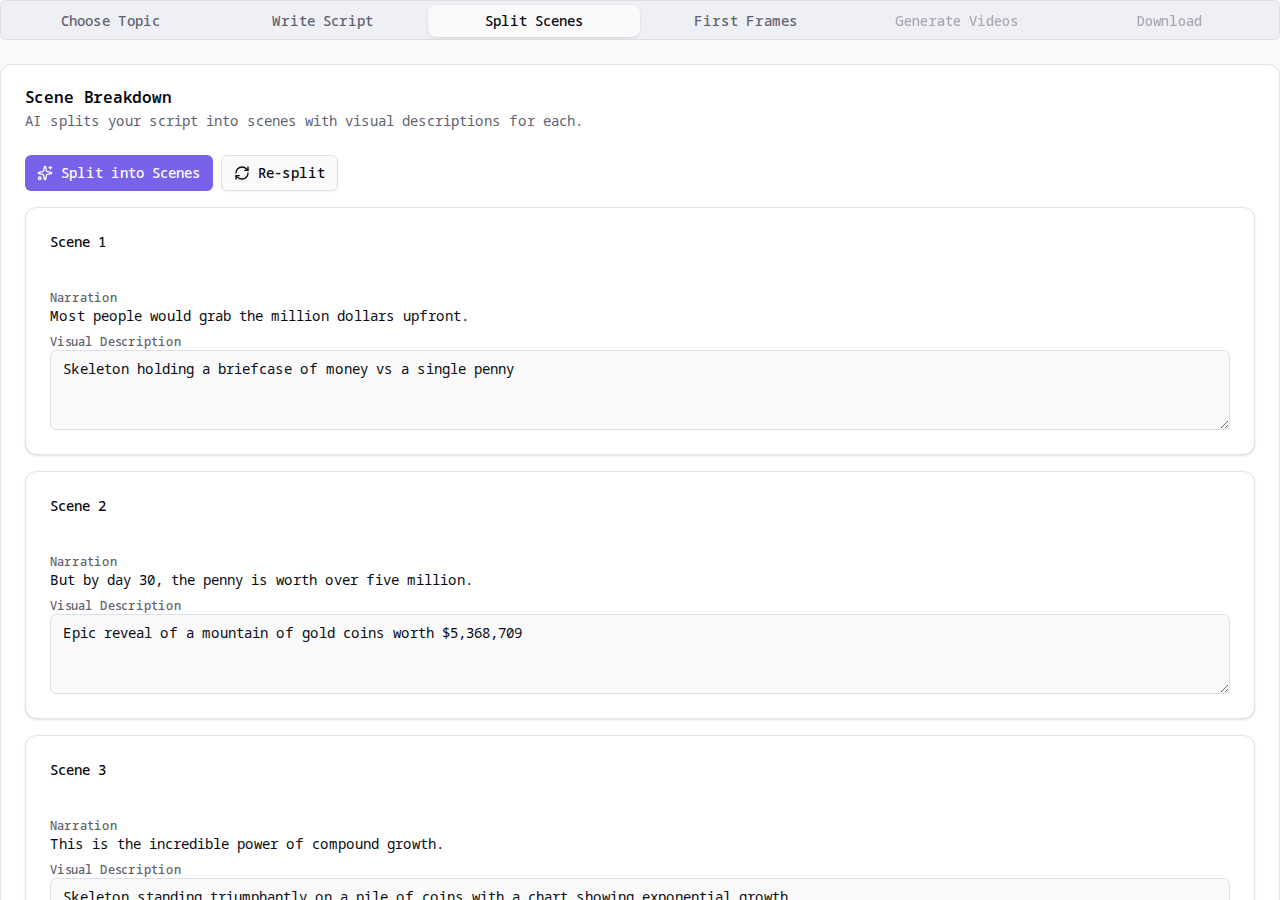
3. Plan Your Visual Scenes
Educational content benefits from visuals that illustrate the concept. If you're explaining what happens to the lungs when you smoke, plan a scene showing the lungs. The scene descriptions should be specific and educational.
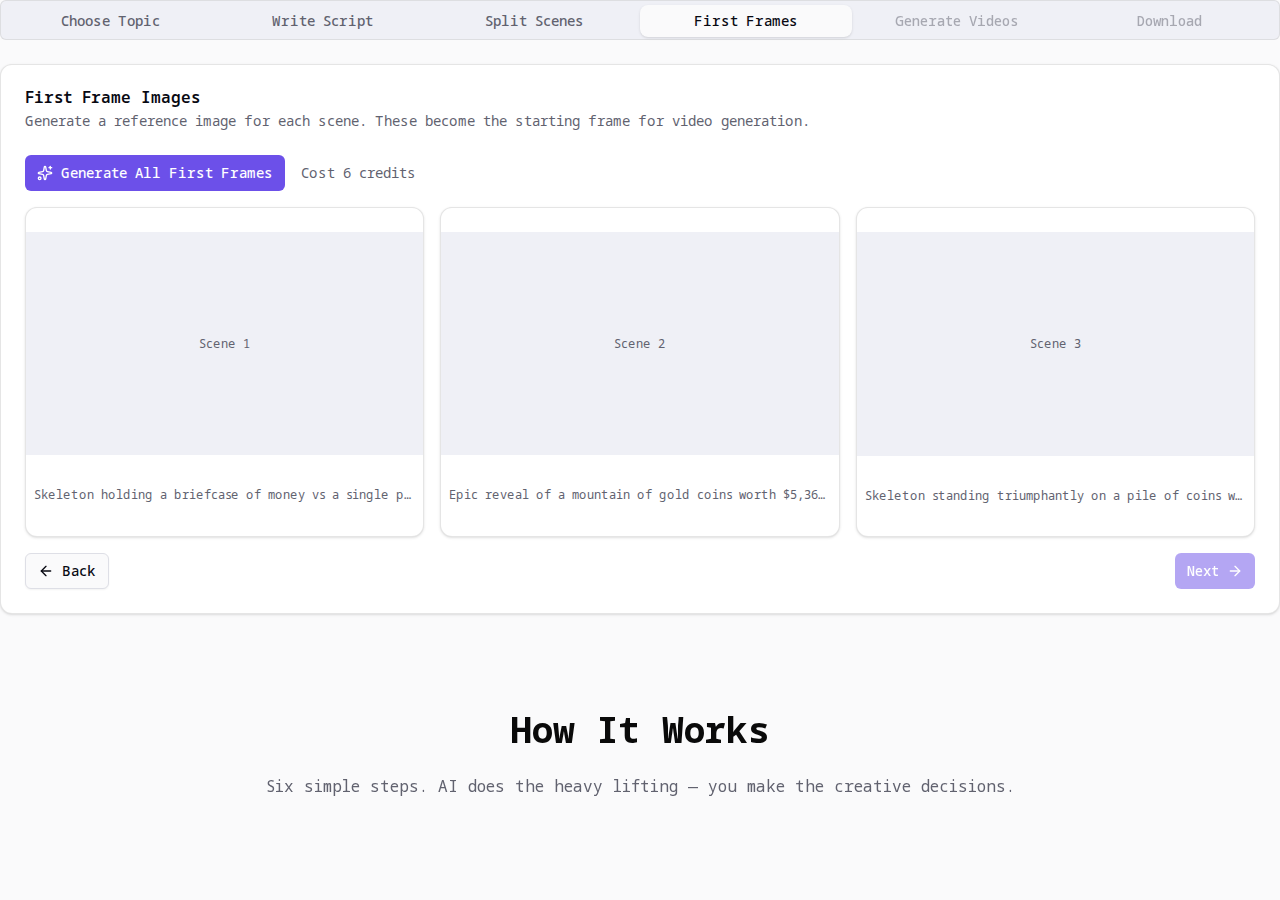
4. Generate and Animate
Use the AI Video Workflow to generate first frames and animate each scene. For educational content, clean backgrounds (Classic or Astronaut skeleton styles) tend to work better than busy or stylized environments.
Character Tips for Educational Content
Your skeleton character should reinforce the educational tone of your content. Here's how to choose and use it effectively.
Use a Clean, Simple Style
For educational content, Classic or Astronaut styles work best. They have minimal visual noise, which keeps the focus on the information being explained.
Consistent Background Color
Pick one background color and use it in every video. This builds your channel identity and helps viewers recognize your content in their feed.
Generate a Reference Sheet First
Before making any videos, create a multi-angle character reference sheet. This ensures your skeleton looks the same in every scene — critical for educational content where visual consistency builds trust.
Educational Skeleton Video FAQ
Common questions about creating educational content with the skeleton explainer format.
Start Creating Educational Skeleton Videos
Set up your skeleton character, then use the AI Video Workflow to go from educational topic idea to finished video.