This first-party guide compares SkeletonAI's own workflows, based on product pages and samples recorded on October 11, 2026, with the Bulin workflow checked on October 12, 2026. These are our own product examples, rather than an independent market ranking.
A photo-to-music-video tool can mean several different things: an original performance, a portrait following a movement reference, or a short edit with an existing soundtrack. Choose the result you need before choosing a model. The number of portraits, reference requirements, clip length and sound handling matter more than a model name alone.
This guide compares four SkeletonAI tools: Bulin 47, Smalltown Boy, Pop Star MV and Hotel Lobby. Each has a published short sample. None of those samples establishes a complete song-length music video or guarantees the same result for every input.
Compare the inputs and outputs first
| Workflow | What you provide | Published clip and credit cost | Recorded example and limit |
|---|---|---|---|
| Bulin 47 | One authorized adult portrait; the five-second freestyle scene is fixed | Five seconds, 9:16 vertical; 500 credits | Virtual-adult sample with sound. Face and gesture matching can vary. |
| Smalltown Boy | Two distinct character portraits and a five-second two-person movement reference | Five seconds, 3:4 portrait; 500 credits | Silent two-person sample. It does not reproduce the reference's front/back position swap. |
| Pop Star MV | One authorized adult portrait and an authorized five-second landscape reference | Five seconds, 16:9 landscape; 500 credits | Silent stairway sample with a virtual adult. Its wider and closer views come from the same reference, not independent cameras. |
| Hotel Lobby | Two authorized character images; the orange studio is supplied | Eight seconds, 9:16 vertical; 60 credits | Original studio duet. This is an original performance, not an exact recreation of the source music video. |
Scroll the comparison table sideways to read every column.
The credit figures describe the listed generation requirement at the recorded date. Video generation uses purchased credits; free image trials do not include a video. They are not cash prices, API bills or a promised cost per successful output. Check the selected page and checkout for current terms before paying.
Choose the workflow that matches your idea
One-person freestyle: Bulin 47
Bulin 47 suits a short, vertical character-performance idea. The current page uses one adult portrait and a fixed freestyle reference, so the task is narrower than assembling scenes for a full music video.
Watch the existing sample before uploading. It shows a virtual adult placed in the reference performance with the soundtrack restored. It is a product example, not a customer testimonial. Facial detail, gestures and other people in the scene may vary; the sample does not verify pets, exact lip-sync or a ten-second recreation.
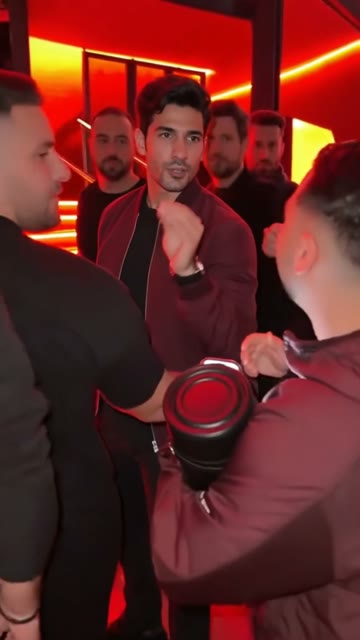
A frame from the previously recorded Bulin 47 sample. Watch the corresponding public example; this is a historical example, not a guarantee for another portrait.
Upload one portrait and confirm your permission to edit it. The scene and movement are already set, so there is no dance-video upload or template selection. When your own result is ready, the page restores this scene's original sound automatically. If sound restoration fails, the video stays available with a retry control; the page does not invent a new soundtrack.
Two-person reference edit: Smalltown Boy
Smalltown Boy is the option to inspect when two distinct characters need to follow a short movement reference. Prepare two separate portraits rather than trying to represent both people with one image.
The recorded sample is a five-second portrait clip with two virtual adults. It also shows a meaningful limitation: the reference's front/back position change was not reproduced. If that swap is the central part of your idea, do not assume the example proves it works. Compare the actual scene positions with the reference before deciding whether the output is usable.
Short landscape performance: Pop Star MV
Pop Star MV uses a five-second landscape reference and a portrait. Its recorded stairway sample retains a wider-to-closer cut for one tested input pair. That makes it useful evidence for that short edit, while leaving longer sequences and different inputs unproven.
The public example is silent because its reference had no song. A separate recorded audio check used original test sound to verify the browser soundtrack workflow. It did not establish popular-song timing, beat sync or exact lip-sync. Evaluate the visual sample and the sound workflow as separate pieces of evidence.
Original two-character studio clip: Hotel Lobby
Hotel Lobby takes two character images into a supplied orange recording studio and produces an eight-second vertical performance. It is a different starting point from the three reference-driven edits above.
Choose it when an original studio duet fits your idea. If your goal is to reproduce the exact framing, choreography, cuts or voices of a particular music video, the existing sample does not establish that result. Its lower listed credit requirement also does not make it a substitute for a workflow with different inputs and output.
Understand what happens to the sound
For the supported reference-driven workflows, compatible original audio is kept on the user's device while silent reference video is uploaded. After generation, the browser can combine that retained audio with the corresponding result. This preserves an existing soundtrack; it does not create a new song or change the character's voice.
Bulin 47 restores its fixed scene's original sound automatically in the browser. Pop Star MV and Smalltown Boy keep their separate reference and soundtrack controls. Follow the selected page: automatic sound handling on Bulin does not mean every tool has the same workflow.
For Pop Star MV's reference and soundtrack workflow, the documented first-version limits are a five-second H.264/AAC MP4 reference, up to 4 MB, and a result up to 32 MB for local soundtrack combination. Those limits belong to that workflow; do not copy them to another tool without checking. For Pop Star MV, refreshing or changing devices means selecting the original reference again for its locally retained audio. Bulin uses its fixed reference; if that reference can no longer be verified, it keeps the video without guessing a soundtrack.
Check your material before generating
Start with the selected tool's real requirements. Confirm the portrait count, clip duration, orientation, file format and page limits. Use material you have permission to process, including portraits, reference footage and any soundtrack. A public example or source attribution does not grant permission to reuse someone else's content.
Keep the task small enough to judge. Decide which visible details matter: character identity, scene positions, the reference cut or a particular gesture. After generation, compare those details, play the result and use the normal download controls. If an important detail is wrong, a short sample from another input does not turn that output into a successful result.
Common questions
Can these tools make an entire music video?
The examples in this guide establish short five- or eight-second clips. They do not establish complete songs, long-scene consistency or a finished multi-minute edit. Choose a short task that fits the published contract.
Will the original voice or song be recreated?
Retaining compatible reference audio is different from generating a voice or song. The documented browser workflow combines existing audio with a result. It does not prove voice replacement, beat matching or exact lip-sync.
Does a lower credit cost mean better value?
Compare matching tasks first. Hotel Lobby's original studio performance and a five-second reference edit deliver different things. Credits alone cannot tell you whether an output meets your idea, and they do not establish a final cash price or a success rate.
Which tool should I open first?
Open Bulin 47 for one-person freestyle, Smalltown Boy for a two-person reference edit, Pop Star MV for a short landscape performance, or Hotel Lobby for an original studio duet. Watch that tool's recorded sample, then check its current input and credit requirements before starting.
Sources and fact dates: the four linked product pages and their recorded public examples, October 11, 2026; Bulin input and automatic-sound workflow checked October 12, 2026. For the original Bulin reference, see MakeViral and the source link on the Bulin page.
Browse SkeletonAI articles or start with the Bulin 47 photo-to-freestyle tool.